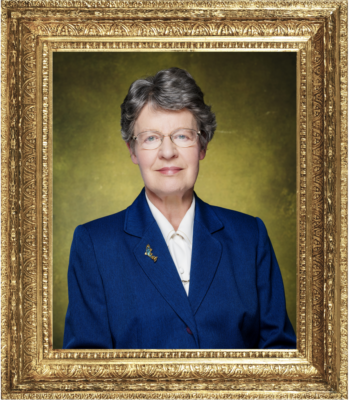
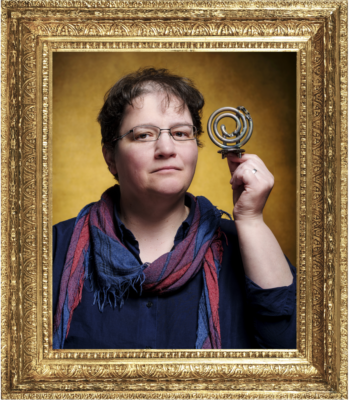
Professor Mandy MacLean
MBE, FRSE, FMedSci, FBPhS
Strathclyde Institute of Pharmacy and Biomedical Sciences, University of Strathclyde

I am a Pharmacologist and studied Pharmacology at Edinburgh University, both for my BSc and PhD. I was always interested in biology at school and I found reading about pharmacology, and how many drugs were derived from plants and animals, fascinating.
My studies took me to the USA and Cambridge. I now carry out research into pulmonary arterial hypertension, which is a disease of the lungs caused by the arteries of the lungs closing down. It is a fatal disease for which there is no cure and it mainly affects women. We are currently looking at how obesity, oestrogens and serotonin play a role in the development of this disease to see how new drugs might intervene to treat patients.
I am a Distinguished Professor at the University of Strathclyde. I am currently on the Council of the Academy of Medical Sciences (AMS) and am their Diversity Champion and sit on an MRC and BHF grant panel. In my ‘spare’ time I am a mum, wife, friend, carer and artist and hold public engagement in science events.
Survival is very poor in pulmonary arterial hypertension and I am most inspired and motivated by the needs of these patients. I am also motivated to progress the careers of the young researchers who work with me wherever I can. The discipline of Pharmacology, and how the pharmacology alters with disease, fascinates and inspires me. My roles in the AMS, BHF, MRC and in public engagement reflect my wish to engage in, and contribute to, science and the scientific community at all levels.
Meet Women in Science
-

I‘m an Immunologist by training and believe that fighting infection through the same or similar mechanisms which the body’s immune system employs to combat bacteria and fungi, is one solution to this enormous infectious disease challenge. I have always been fascinated by biology; how the body functions in health and disease. I fell in love with immunology from my first university lecture, despite (or because of?) the fascinating complexity and criticality of the immune system to our health.
-
I’m a Human Geneticist but there’s nothing in my past that suggests that that’s what I would become. My journey to where I am now is really a combination of different events: some choices and some chance.
-
I currently lead a major project sponsored by the Royal Academy of Engineering and the Civil Engineering Contractor, BAM Nuttall, to take research technologies I have been developing at the University of Strathclyde into the ground-engineering industry.
-
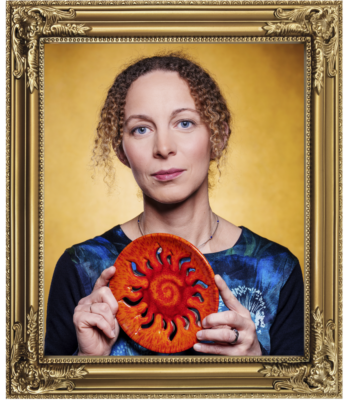
I am a Soft Matter and Biological Physicist, which means I study anything that wobbles when you poke it.
-
Working as a teenage Mary Poppins on a summer ‘dude ranch’ in Texas, I found myself fearing that my brain may turn into mush. I headed to the local bookstore in search of their most challenging book, which happened to be Relativity: The Special and the General Theory by Albert Einstein. Evenings were spent on the ranch re-deriving the equations, trying to work it all out for myself, unknowingly laying the foundations for my future life surveying the universe.
-
Transformative innovations in medicine and public health require triple helix collaborations between the NHS, academia, and industry.
-
As a child, I used to sit down every week and watch Star Trek, with all its iPads, body scanners, needleless injections, handsfree communication, virtual reality and teleporters; and it seemed like a world of wonder and possibility. It’s astonishing to think that all of this is now a reality, even the teleporter!
-
My greatest desire is not to be the only woman on a committee or a slate of speakers as so often happens just now. I know this won’t go on forever, so I’m making the most of it while I can!
-
I wanted to be a scientist for as long as I can remember, and I went to university to study Mathematics and Physics. I didn’t know about computing then and indeed a teacher at school had told me that I wouldn’t like computing but I took a course in programming at university and just loved it! I found it was my calling.
-
I am an Anatomist and a Forensic Anthropologist. By exploring the intricacies and variability of the human body, my disciplines can help to uncover information about the living identity of an individual. This becomes particularly pertinent for police investigations when, for example, a body is found and the identity of the deceased is unknown.
-
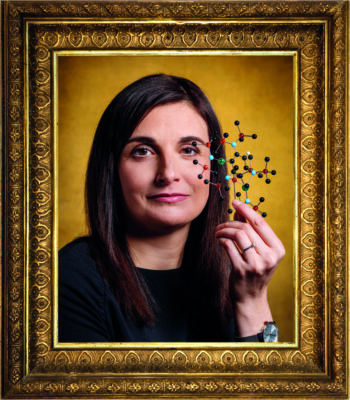
I am a Synthetic Chemist who, in general terms, can be described as a molecular architect. Our research focuses on finding new tools that enable the construction of useful molecules, of relevance to the pharmaceutical industry and, therefore, having a direct impact on society.
-
I am a Clinical Academic and have the privilege of working with patients. This offers me the opportunity to understand the physiology and pathology that underpin complaints that affect, as many as, one in four women.
-
I’ve always liked mathematics, even as a small child. I liked its rigour and simplicity, but I came to realise that what I really wanted to do was apply mathematics to understand things in nature.
-
My research involves developing the technique of surface-enhanced Raman Scattering (SERS) for multiplexed bioanalytical applications.
-
I loved science from an early age. I loved doing experiments, loved mathematical challenges, loved problem-solving. I was fortunate to have inspiring science and maths teachers and supportive parents who all encouraged me to study chemistry, physics and maths. I enjoyed science, found it came naturally to me and never hesitated to pursue a career in chemistry.
-
I am an Environmental Hydrologist with a BSc in Environmental Sciences. I did a PhD in Wetland Hydrochemistry that inspired my long-term research on land use and environmental pollution, in particular, understanding the pathways of nitrogen and phosphorus loss from agricultural land to water, and the impact on freshwater quality.
-
I have a natural curiosity for knowledge, so research and university are natural fits for me. I came to Scotland in 1992 as an Erasmus student to Strathclyde University and stayed on to do my PhD on developing novel methods for understanding coal plasticity for steel-making applications.
After completing my PhD, I took academic positions in the USA and UK and then returned to Scotland and joined Heriot-Watt University in 2012. I find myself privileged to work in an area that I truly enjoy and also that will help future generations.
-
I was born in Dundee and grew up in Ireland in a family of scientists. My parents were scientists involved in the investigation of fires. From an early age, I knew that women could be successful scientists and that science could be used as a real-world, practical, problem-solving tool from which you could earn a living. Indeed, my brother and I used to earn our pocket money by sticking our parents’ fire scene photographs into reports – this was long before digital photography! Now, I am an academic and a Forensic Scientist undertaking casework in fire investigations, terrorist events and the illegal manufacture of drugs.
-
I’ve always been interested in biology. I was that child who got the frog spawn out of the pond and watched the tadpoles develop into frogs; and I was the child who worked at the local country park looking at how trees broke down through the action of fungi. I went to the University of East Anglia thinking that I wanted to study Ecology, but during my time there I realised that I preferred the more intricate details of how biology worked; I ended up becoming a specialist in the field of microbiology.
-
I make unusual molecules from the metals at the bottom of the periodic table. We don’t know enough about their bonding, and the more unusual the molecule, the better we are able to challenge preconceptions, and improve our understanding of their behaviours. This is important as many of the metals
are technology-critical elements that find use in wind-turbine magnets, whilst others are present as unwanted radioactive isotopes in spent nuclear fuel. -
I am an Engineer who works in academia. I was the first woman to be Professor of Chemical Engineering in Scotland; the second in the UK.
My research deals with the design and operation of industrial processes, such as oil refining.
-
I was Professor of Dermatology at the University of Glasgow 1978–2000, the first time in its 500-year history that a woman was appointed to an established Chair.
-
I am an Applied Statistician. I develop new methods and techniques for analysing different types of data, particularly in the areas of ecology, epidemiology and, most recently, within medical applications.
-
Although I was always interested in science at school back in Liverpool, my first aim in life was to be a primary school teacher. I applied to do this after my first degree in Oxford, but I found that I really enjoyed the research project I carried out in my final year as an undergraduate, so I stayed to do my DPhil at Oxford.
-
I’m an Experimental Physicist. I carry out research designing and building instrumentation for observatories that have detected the first gravitational signals from colliding ‘black holes’ far out in our cosmos.
These ‘gravitational waves’ carry with them unique information about what objects produced them, allowing us to study dark processes in the universe.