Ultrasound evaluation of swallowing: Clinical feasibility and stakeholders’ engagement
Dr Joan Ma, Queen Margaret University
RSE Personal Research Fellowship
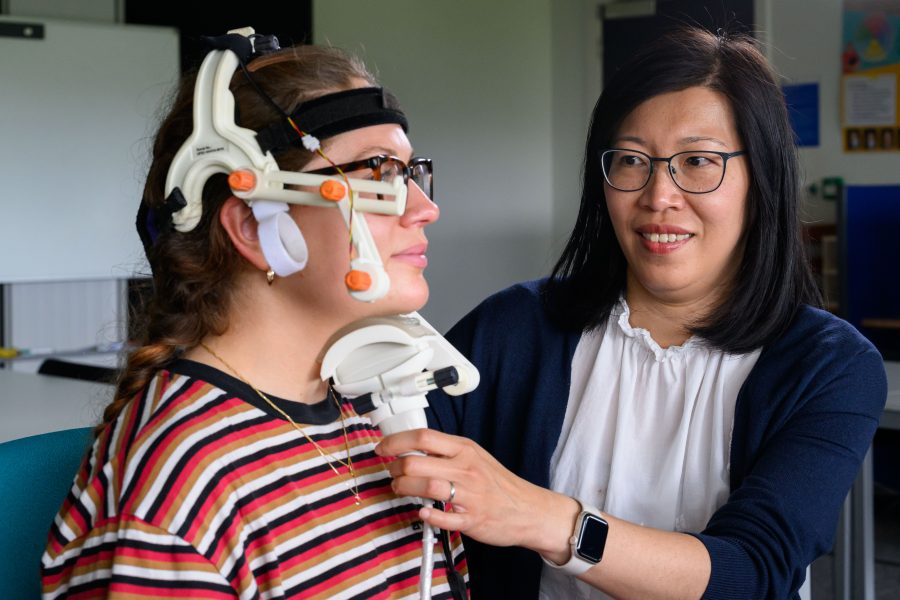
Swallowing is something most of us do without much thought. However, certain clinical groups, such as stroke and cancer survivors or people living with Parkinson’s, are commonly affected by swallowing disorders. These individuals may have difficulties in eating, drinking, and swallowing, which can lead to social isolation and severe medical consequences, for example, malnutrition, chest infections and hospitalisation.
Speech and language therapists traditionally assess swallowing difficulties instrumentally using X-ray (videofluoroscopy) or endoscopic examination. However, RSE Personal Research Fellowship recipient Dr Joan Ma’s project, Swallow Vision, explores the use of Ultrasound as a novel tool to support the clinical assessment and management of swallowing.
Dr Ma explains,
Ultrasound is a safe and non-invasive way to look at swallowing function. The devices we use are portable and more affordable than X-rays, so in the future, they could be used in community settings or at locations closer to patients’ homes. Our work has established a reliable data collection and analysis method in healthy individuals, and this ongoing pilot is extending the research into clinical groups.”
During her award, Dr Ma set out to develop evidence in three main areas:
- Data recording and digital analysis in clinical groups
- Enablers and barriers to using Ultrasound in different clinical settings
- Patient and public’s perceptions and experiences of Ultrasound for swallowing assessment
Working within the Division of Speech and Hearing Sciences at Queen Margaret University, Dr Ma collected data to support the development of her approach. She also consulted with patients, carers, and speech and language therapists to better understand the potential and challenges of integrating Ultrasound into clinical practice.
She believes that Ultrasound could revolutionise swallowing assessments by bringing diagnostic tools closer to patients in community clinics or primary care settings, minimising travel and improving access. Regular Ultrasound monitoring could lead to earlier interventions for those with progressive conditions, potentially preventing complications like malnutrition or pneumonia. Additionally, the visual feedback provided by Ultrasound can make swallowing exercises more engaging and easier to understand, improving rehabilitation outcomes and quality of life.
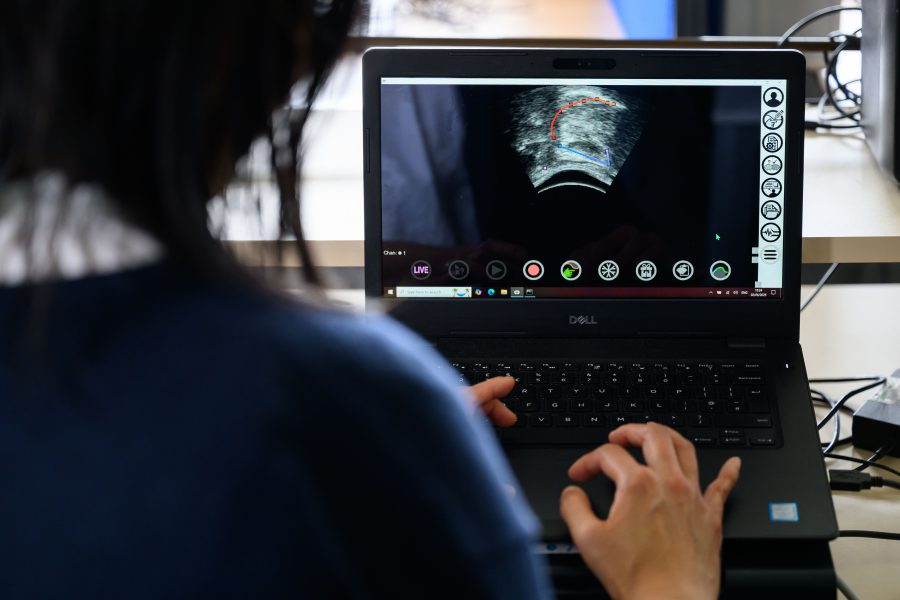
This project can potentially change the delivery of the swallowing clinical service. The information we have gained will enable better planning for a full-scale multi-centre study. We are now one step closer to the long-term goal of developing Ultrasound as a reliable and valid swallowing assessment tool to improve clinical outcomes.”
Speaking about the benefit of her RSE award, Dr Ma said, “The RSE Personal Fellowship was instrumental in creating space and time for focused research; between teaching and administrative responsibilities, it is not always easy to find time to progress research, especially when also working part-time to raise a young family. The award enabled me to carry out essential engagement with patients and clinicians through interviews and focus groups, ensuring that the project addresses real-world needs and challenges. This engagement was key to shaping the research direction and laying the groundwork for practical clinical implementation.”
Dr Ma’s team is now building a strong evidence base for the clinical application of Ultrasound in swallowing care. Their current studies involve monitoring changes in the swallowing function of individuals with Parkinson’s and Muscular Dystrophy to identify early signs of deterioration in these progressive conditions. They are also looking at using Ultrasound as a real-time biofeedback tool for learning and improving swallowing techniques.
The team hopes this project will improve future access to assessment and the effectiveness of swallowing rehabilitation. Swallowing disorders can significantly impact a patient’s quality of life. Dr Ma and her clinical and engineering co-researchers hope their work will bring tangible benefits to patients while also easing pressures on healthcare systems.
More about RSE Personal Research Fellowships:
-
 Open
Open Personal Research Fellowships
Read MoreFocus on a research project for up to 12 months, funding covers a temporary replacement to enable the awardee to take research leave.
