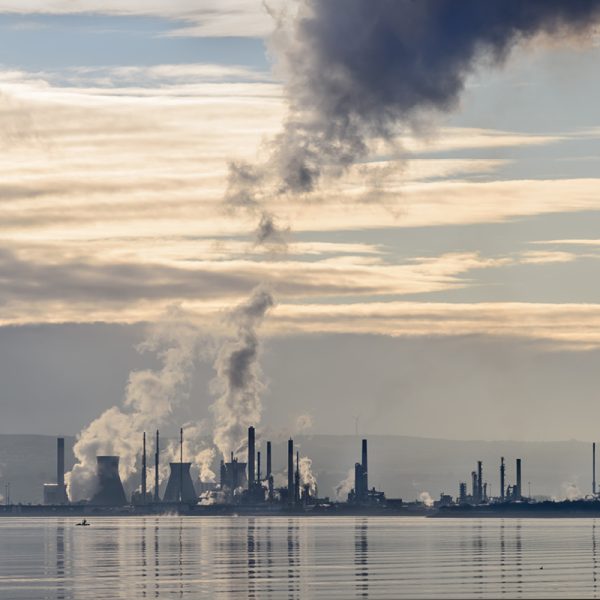
This think-piece considers the idea of the Anthropocene, the term applied to an overarching concept that defines the current state of the geological time interval during which the state of planet Earth has been massively impacted by human activity. Patricia Macdonald writes about the concern with the background against which action to mitigate and/or adapt to the present polycrisis of interlinked climate, environmental and social emergencies should be discussed and judged.
The concept of the Anthropocene – a global phenomenon
Overwhelming evidence now confirms the unequivocal role of human impacts on every region of the world, changing Earth in unprecedented ways:
‘Global climate change, acidifying oceans, shifting cycles of carbon, nitrogen, and other elements, forests and other natural habitats transformed into farms and cities, widespread pollution, radioactive fallout, plastic accumulation, the course of rivers altered, mass extinction of species, human transport and introduction of species around the world. These are just some of the many different human-induced global environmental changes that will most likely leave a lasting record in rock: the basis for marking new intervals of geologic time.’ [1]
Most current long-term environmental concerns are anthropogenic (human-caused) or have major anthropogenic components. It has recently become widely accepted that we are now living in a new time-interval of Earth’s history, the ‘Anthropocene’, rather than in the Holocene, the relatively stable and equable epoch following the last ice age, during which human life as we know it today has developed and flourished.
The Anthropocene has been defined as:
‘the current geological age, viewed as the period during which human activity has been the dominant influence on climate and the environment.’ [2]
or (more precisely) as: ‘the period of time during which human activities have had an environmental impact on the Earth regarded as constituting a distinct time interval.’ [3]
The earliest published use of the word is in 2000 by Nobel Prize-winning atmospheric chemist P. J. Crutzen and biologist E. F. Stoermer (the latter having originally coined the term in the early 1980s). [4]
The unique status and significance of the Anthropocene time interval have been widely noted:
‘In the long history of this planet, our current time, the human age known as the Anthropocene, is the first in which a single species will so rapidly reshape the future of Earth’s climate and all the other conditions that make life as we know it liveable.’ [5]
‘To track in the Anthropocene is to document loss; as biodiversity collapses, its absence is reflected in the ground itself.’ [6]
It is clear that the broad concept of the Anthropocene is now in wide general circulation.
The precise definition of this new time-interval, and whether it is indeed a geological ‘epoch’ or merely a much shorter and less significant ‘event’, has, however, been the subject of considerable controversy in the past two decades, across a wide range of disciplines. The detailed nature of many aspects of the controversy are not relevant here; they have been widely discussed elsewhere. [7] Some distinguished members of the Anthropocene Working Group, such as Jan Zalasiewicz, continue, nevertheless, to argue the case that we are living in a new geological epoch:
‘Crutzen’s concept is simplicity itself: there has been a major, irrevocable planetary shift from Holocene to Anthropocene conditions. Graphs of a swathe of parameters, including major greenhouse gases, shift from the near-horizontal tracks they held for millennia to near-vertical lines in the past century or so.’
Further, they consider that many criticisms of the concept are based on myths or misconceptions, and that it has been misunderstood, ‘[p]robably because it is deeply uncomfortable, bringing tranquil geological abstractions up against ugly contemporary problems. New scientific knowledge can shake long-held perspectives, so it isn’t surprising that the Anthropocene has met resistance.’ But, importantly – despite the considerable controversy, across a wide range of disciplines, over the past two decades, concerning the precise definition of this new time-interval – these authors have expressed the widely held consensus that ‘this new epoch is real, whether formalised or not’, and that ‘Recognising our role in speeding Earth towards a radically new future is a prerequisite to coping with the resulting changes.’ [8]
And, interestingly, the very existence and intensity of the controversy has led to widespread further and deeper consideration of the time intervals, the scale, the geographical locations, and the socio-political, economic, and colonialist aspects, of various anthropogenic impacts following the end of the last ice age (c. 11,700 years Before Present).
The identification of the Anthropocene, as a deepening global phenomenon with widespread local impacts, is a useful way of focussing on the interlinked crises of climate, nature, pollution and social inequity, and the need for humanity to address these. But for many environmental policy related purposes, the vexed question of a precise beginning of such a time-interval does not need to be answered – the clear evidence for many of the associated changes is sufficient to require action. And also, looking at a longer time-frame than ‘the past century or so’ of anthropogenic impacts – extending, rather, back to the end of the last ice age – may enable more long-standing root causes of current complex environmental problems (both overarching and specific), in Scotland and worldwide, to be given the consideration that they require.
The process of ‘horizon-scanning’, both globally and locally, is clearly an essential one, and it is important that regular updates of such useful exercises should be continued, especially in the light of the constantly changing emphases, due to scientific data and systems developments, in relation to likely impacts. [9]
It is also the case, however, that the majority of these complex and often interlinked problems, globally and locally, are not simply concerns for the future, requiring solutions to be devised in the future. Many of them, conversely, are of immediate concern and have long been recognised. Feasible solutions to them have been broadly understood (with their detail becoming increasingly well established) for almost equally long, but most of these have not been implemented due to difficulties that are largely due to fixed/traditional mind sets of a political, sociological and/or psychological, or ‘economic’ form. In some cases, legal mechanisms to deal with these problems actually exist, but have not been appropriately applied. This situation should be urgently addressed by government and its agencies.
New ways of thinking, and old traditions as impediments
There are many new and highly relevant concepts that make resolution more complex but need to be understood if any progress is to be made.
The ‘shifting baseline’ phenomenon/syndrome and its effects on environmental perception
‘With ongoing environmental degradation at local, regional, and global scales, people’s accepted thresholds for environmental conditions are continually being lowered. In the absence of past information or experience with historical conditions, members of each new generation accept the situation in which they were raised as being normal. This psychological and sociological phenomenon is termed shifting baseline syndrome (SBS), which is increasingly recognized as one of the fundamental obstacles to addressing a wide range of today’s global environmental issues.’ [10]
‘If humanity were to feel the cumulative burden of loss and damage over millennia, it would already be unbearable, but shifting baselines have a protective influence. … You cannot regret the loss of something that you never knew existed, but shifting baselines, while soothing the sting of loss, do not fully protect us from the consequences of today’s recklessness. We know what we have done.’ [11]
Indeed, we do, in terms of data at least, if not of direct perception. We should therefore be less subject to SBS than has been the case in the past, although this is often difficult. So, we must remain constantly aware of this phenomenon, and resist acceptance of the current environmental status quo.
The difficulties in perceiving, and of elucidating, versions of ‘slow violence’ (which has been defined as ‘a violence that occurs gradually and out of sight, a violence of delayed destruction that is dispersed across time and space, an attritional violence that is typically not viewed as violence at all.’ [12]
‘To engage slow violence is to confront layered predicaments of apprehension: to apprehend – to arrest, or at least mitigate – often imperceptible threats requires rendering them apprehensible to the senses through the work of scientific and imaginative testimony. An influential lineage of environmental thought gives primacy to immediate sensory perception, to sight above all, as foundational for any environmental ethics of place. … But what happens when we are unsighted, when what extends before us – in the space and time that we most deeply inhabit – remains invisible?’
and
‘… how can we convert into image and narrative the disasters that are slow moving and long in the making, disasters that are anonymous and that star nobody, disasters that are attritional and of indifferent interest to the sensation-driven technologies of our image-world? How can we turn the long emergencies of slow violence into stories dramatic enough to rouse public sentiment and warrant political intervention, these emergencies whose repercussions have given rise to the some of the most critical challenges of our time?’ [13]
The controversy, globally and locally, around the so-called ‘tragedy of the commons’, and practicable means of equitably sharing natural resources held in common [14]
The term ‘tragedy of the commons’ refers to the exhaustion of a resource, considered as ‘free nature’, due to the selfish behaviour of individuals in the absence of effective mechanisms for controlling consumption. This situation may take place at a wide range of scales from that of the classic example of a pasture shared by a small number of individuals who keep grazing animals, to that of Earth’s oceans and atmosphere, which are shared by all the world’s living creatures. Freedom of action in a commons may be no problem if that commons is extensive and the numbers of those using it are small. Different constraints on the users are appropriate and effective in different cases, but difficulties may arise for a number of reasons, e.g. those involved do not know each-other; their uses of the common resource are difficult to monitor and to police; penalties for excessive use are difficult to agree and/or to enforce. Many examples are available of successful systems for the sharing of a common resource, but almost all of these have been local and small in scale. Better methods of sharing the commons, both local and global, are urgently needed.
The role of landownership and other vested interests in the environment, globally and locally, (technically legal, although often historically and morally dubious in relation to assets previously held in common), and the tendency of these interests to effectively resist regulations and other government led strictures.
A classic and controversial example of this global problem in a local Scottish environmental context – and one which is dealt with differently in some other countries in Europe – is that of the failure of regulation of the population of semi-wild deer, in the absence of their original natural predators, and their numbers kept high for sporting purposes. This failure is partly due to ineffective legislation, and partly to difficulties concerning its implementation on the ground. A key failure has been no implementation of the recommendations of the government’s Deer Management Working Party; the proposals in the Natural Environment (Scotland) Bill published in February 2025 seek to rectify this. These failures have prevented, over many years, the natural regeneration of native trees – much the most successful and economical means of woodland restoration. As a result there are extensive areas of un-regenerating, potentially carbon-sequestering, and biodiversity enhancing, native woodland and associated understorey vegetation. This situation has in turn led to a controversial waste of public money in well-intentioned grants for planting trees, many of which fail to become established due to unsuitable local conditions.[15] The reality, that control over land management has rested principally with private landowners, who have often consistently, largely out of self-interest, resisted ecologically desirable change, has been a major factor in preventing the ecological regeneration of chronically degraded habitats for both biodiversity and carbon capture. It is to be hoped that this problem will at last begin to be redressed by the widespread introduction and effectively monitored implementation of the currently proposed Deer Management Nature Restoration Orders (DMNROs and proposed changes to the deer legislation in the Natural Environment (Scotland) Bill). [16]
However, the extent to which this legislation will be effective is questionable. Scotland currently has no control over who owns the land and no control over how it is managed unless government grant aid is requested. This is in marked distinction to other European countries such as Denmark and more recently Iceland.
Another controversial example is the issue of muirburn for grouse-moor management. [17]
Issues of supra-national vested interests, and the various ways in which national sovereignty, and also devolved powers within sovereign states (as in the UK), are currently being eroded
‘The forces of inaction have deep pockets. Environmental activists face well-funded, well-organised interests that invest heavily in manufacturing and sustaining a culture of doubt [and ‘controversy’] around the science of slow violence, thereby postponing policies that would help rein in the long-term impacts of climate change in particular.’ [18]
‘Since roughly the Second World war, sovereignty has figured out ways to sell its perks on the international market. Today’s governments are wont to leverage their commercial faculties, hawking “something as sweeping as laws and as petty as stamps; as primeval as land and as functional as a phone number.” Enterprising states act as full-service landlords: they rent low-tax zones to international corporations, … and jurisdictional largesse to the highest bidder.’ [19]
The difficulty of envisioning complex linkages between components of crises
Multiple global crises have recently linked together in ways that are significant in scope, devastating in effect, but poorly understood, to create a situation that has been described as a ‘polycrisis’. The current confluence of unfortunate events appears to be not merely a temporary coincidence, but one in which the component crises are entwined in vital ways. A theoretical framework is being developed to explain the causal mechanisms of this entanglement.
‘In this framework, a global crisis arises when one or more fast-moving trigger events combines with slow-moving stresses to push a global system out of its established equilibrium and into a volatile and harmful state of disequilibrium. [Three main causal pathways have been identified] – common stresses, domino effects, and inter-systemic feedbacks – that can connect multiple global systems to produce synchronized crises. …The polycrisis concept is a valuable tool for understanding ongoing crises, generating actionable insights, and opening avenues for future research.’ [20]
Impediments to effective policy-making and action
Examples follow that are particularly relevant to Scotland and the UK (many of which are also important, or have equivalents, globally):
Difficulties for environmental policymaking due to the erosion of national sovereignty, and of fully devolved powers to administrations within sovereign states (such as that of the Scottish Government within the UK, due in part to powerful lobbying at Westminster undermining the devolved powers of the Scottish government)
A current example being the way in which the Internal Market Act, passed at Westminster in 2020 after Brexit, can negatively impact environmental policymaking and legislation across Scotland, Wales, England and Northern Ireland. [21]
The difficulties around gaining public interest in and support for useful (if sometimes controversial) actions in the environment, including:
removal of excessive grazing / browsing / draining / burning / pressure on important habitats, e.g. native woodland (pinewood, temperate rainforest) and peatland
mitigation of damage due to extractive activities such as bottom-trawling for fish, dredging or mining for aggregate, particularly in inshore marine areas, and to pollution from various sources
eliminating or greatly reducing the widespread use of damaging biocides (insecticides and weed-killers) on farmland, and in domestic gardens and urban streets (applied in the interests of ‘tidiness’)
dealing with ‘invasive alien’ species, e.g. Rhododendron ponticum, in ways that are not themselves highly damaging (e.g., in that particular case, the continuing problematic recommendation of the use of the biocide glyphosate)
species reintroductions to enhance ecological resilience, and associated problems for some land-users
The paucity of a full geographical inventory of appropriate biological and environmental data, both specific and amalgamated (currently and, especially, over long time-scales), concerning, e.g. species (both biodiversity and abundance, including pollen records); accurately dated traces of the extent and composition of ancient woodland (from material other than pollen, present in water-bodies and bogs); and a reliance upon amateur/citizen science (although valuable in its own right, and also to be encouraged for other reasons) for much of what exists, most of it very recent
The persistence, in both directions, of a lack of cross-cultural understanding (and homework!) between the ‘two cultures’ of ‘the sciences’ and ‘the arts and humanities’, which lessens the potential power and usefulness of the arts and humanities to contribute appropriately – especially relevant, with a few consistently noble exceptions, in relation to the role of the press (and many of its readers), as recognised by, e.g., Simon Kuper of the Financial Times:
‘The journalists setting global news agendas tend to have higher incomes, arts degrees and little personal experience of societal catastrophe. These characteristics underpin the media’s failures. Our complacency and lack of scientific training encourage us to underplay the biggest story of them all, climate change.’ [22]
This problem – a mutual lack of understanding between the ‘two cultures’ – is not, however, limited to those in the category of ‘influencers’, but often applies also to policy makers – those in a position to decide on, guide or implement action, many of whom exhibit a ‘silo mentality’ e.g. politicians, political advisers, civil servants, and local government officials.
The difficulty of translating even the most well researched, dramatic and persuasive journalistic accounts into action
‘It is worse, much worse, than you think. The slowness of climate change is a fairy tale, perhaps as pernicious as the one that says it isn’t happening at all, and comes to us bundled with several others in an anthology of comforting delusions: that global warming is an Arctic saga, unfolding remotely; that it is strictly a matter of sea level and coastlines, not an enveloping crisis sparing no place and leaving no life undeformed; that it is a crisis of the “natural“ world, not the human one; that these two are distinct, and that we live today somehow outside or beyond or at the very least defended against nature, not inescapably within and literally overwhelmed by it; that wealth can be a shield against the ravages of warming; that the burning of fossil fuels is the price of continued economic growth; that growth, and the technology it produces, will inevitably engineer a way out of environmental disaster; that there is any analogue to the scale or scope of this threat, in the long span of human history, that might give us confidence in staring it down.
Quite. What more is required of our informed writers?
And it is the gravity of the situation that is real, not the misinformation with which we are constantly bombarded.
And last but by no means least: how to replace, in ways that protect the living world, and with a just transition, the enormous and unprecedented energy supply that has been available from fossil fuels
‘”One barrel of oil has the same amount of energy of up to 25,000 hours of hard human labor, which is 12.5 years of work. At $20 per hour, this is $500,000 of labor per barrel.” A barrel of oil costs about seventy dollars at this week’s market price.
‘To call that energy revolution liberating hardly suffices. … After four thousand years of economic stasis, we were suddenly in a world where the average standard of living doubled in a matter of decades, and then doubled again and again and again. And we liked it so much that it became the raison d’être of our political life.’ [24]
But simply replacing fossil fuels with electricity, even if renewably generated, is by no means the end of this story. Electricity, renewably generated on- or off-shore, is already delivering benefits in terms of the approach to net zero. But the combination of the required physical infrastructure for the new industries, their connections to the grid, the required battery storage farms, and the location of these various elements near to the sites of power generation (because of the problems of transmission losses), as well as the globally obtained physical requirements of the new vehicles for transport, appears highly likely to be as inequitably distributed locally or globally, both physically and in terms of its benefits, financial and otherwise, as the present fossil-fuel-based systems. Its introduction, even here in democracies such as Scotland and the UK, currently appears to be proceeding with a lack of true regard for a Just Transition, and a minimum of real consultation with local communities and other relevant entities, and may also prove as damaging to local communities, environments, biodiversity, and the abundance of nature – even in its present degraded state – as the existing systems that it is intended to replace. [25] There are currently no required whole life-cycle (WLC) assessments of the components of the required new infrastructure, and no thorough assessment of potential consequences to the natural environment, directly or indirectly, of design, construction and operation.
Concluding comments
The question arises whether it is possible, even in the medium term, to achieve effective local and global climate, environmental and social transition on the basis of a new cycle of widespread local and global environmental damage. It would appear that the current preoccupation of Scotland’s Just Transition Commission, and equivalent bodies elsewhere, is a strategy for the achievement of net zero which maintains something closely resembling present lifestyles. This is probably not feasible, and what is really required is to begin the very difficult task of transitioning to lifestyles that involve greatly reduced overall consumption, although the successful implementation of that task would appear to be incompatible with the context of current political/economic/social norms.
Although ‘we must redouble our efforts to wean ourselves off fossil fuels, because how fast we do this will dictate how long the damage will endure’ [26] – and recent research on the role of the decline in natural sequestration of carbon dioxide should focus us even more intently on the need for haste [27] – the true answer to the present climate and environmental crises has to be the abandonment of the current widespread frenzy of consumerism, along with changed attitudes to our relationships with the Earth and its other inhabitants, in which we ‘[engage] land not as a machine but as a community of respected non-human persons to whom we humans have a responsibility’. [28]
It is possible that if ‘the current era is seen as a moment of transformation, of tipping points, or of coming-into-being [rather than as the start point or the end point of an epoch], this opens the possibilities that we might be able to imagine.’ [29] The necessary changes involved, however, can only come about after a much wider consideration and discussion throughout our societies of the issues associated with the present time-interval (whether formalised or not) of the Anthropocene.
This article is part of a series from the RSE’s Environment Community of Interest. The aim is to stimulate informed public debate on the many aspects and elements of this complex and vexed subject. We’d love to hear your thoughts about this piece, email us on publicpolicy@theRSE.org.uk.
The RSE’s blog series offers personal views on a variety of issues. These views are not those of the RSE and are intended to offer different perspectives on a range of current issues.
[5] Ellis, E. C., quoted on Merriam-Webster Dictionary (accessed online 1 November 2024;) and Ellis, E. C., op. cit., p. 132
[6] Goldfarb, B., Smithsonian Magazine, 23 Oct 2024
[7] Ellis, E. C., Anthropocene: A Very Short Introduction, Oxford University Press, 2018; Lewis, S. L. and Maslin, M. A., The Human Planet: How We Created the Anthropocene, Penguin Random House UK, 2018, especially Chapters 1 and 2; Brief summaries are provided by, e.g., Macdonald, P., and by Macfarlane, R., (essay ‘Generation Anthropocene’, originally published in The Guardian, 29 August 2016) in Macdonald, P., Surveying the Anthropocene, Edinburgh University Press/ Studies in Photography, 2021/2 (hardback and e-book), pp 2-11 and 28-40
[8] Zalasiewicz, J., ‘Our mark on the planet’, New Scientist, 11 May 2024, p. 21
[9] See, e.g., the report by Mance, H., ‘Tipping point: What happens to Britain if the system of ocean currents that regulates climate collapses?’, FT Weekend Magazine, 11/12 January, 2025, pp 20-28 (based on publications by and interviews with Tim Lenton, University of Exeter, and Stefan Rahmstorf, Potsdam University, and colleagues)
[10] Soga, M., & Gaston, K. J., ‘Shifting baseline syndrome: causes, consequences, and implications, Frontiers in Ecology and the Environment, 04 April 2018 / https://esajournals.onlinelibrary.wiley.com/doi/10.1002/fee.1794 (accessed online 21 January 2025)
[11] Roberts, C., ‘Shifting Baselines’, Granta, 153: Second Nature, Tree, I., (Ed.), 2020, pp 12-25
[12] Nixon, R., Slow Violence and the Environmentalism of the Poor, Harvard University Press, 2011, Introduction, p. 2
[13] Ibid., pp 3 and 14
[14] Hardin, G. ‘The Tragedy of the Commons’, Science 162 (3859), 1243-1248, 13, December 1968 / DOI: 10.1126/science.162.3859.1243; and critical commentary, in a UK context, on Hardin’s controversial views in, e.g., Shrubsole, G., The Lost Rainforests of Britain, William Collins, 2022, pp 183-95 and The Lie of the Land: Who really cares for the countryside?, William Collins, 2024, pp 20-2, 39-40, 218-9
[16] Managing deer for climate and nature: consultation, Scottish Government, 5 January 2024: https://www.gov.scot/publications/managing-deer-climate-nature-consultation/pages/4/; MacMillan, D. C., https://parkswatchscotland.co.uk/2024/03/29/managing-deer-for-climate-and-nature-consultation/ (accessed online 21 January 2025);
Crofts, R., ‘Landscape change in the Scottish Highlands: A review’ (Fenton, J., Landscape change in the Scottish highlands – imagination and reality, Whittles, 2024), Scottish Geographical Journal, 140, 2024, Issue 2-4, https://www.tandfonline.com/doi/full/10.1080/14702541.2024.2401170 (accessed online 21 January 2025);
See also, for the UK context, e.g., Shrubsole, G., The Lie of the Land: Who really cares for the countryside?, William Collins, 2024, especially the final chapter, ‘Conclusion: A Common Treasury for All’, pp 211-232
[19] Abrahamian, A. A., The Hidden Globe: How Wealth Hacks the World, Riverhead, 2024; and review: Lewis-Kraus, G. ‘Bucks Without Borders: In the geography of the rich and mobile, sovereignty is for sale.’, The New Yorker, 28 October 2024, pp 65-69.
[20] See, e.g., Lawrence, M., Homer-Dixon, T., Janzwood, S., Rockstrom, J., Renn, O., & Donges J.F., ‘Global polycrisis: the causal mechanisms of crisis entanglement’, part of ‘Polycrisis in the Anthropocene’, in Global Sustainability, Vol. 7, Cambridge University Press, 17 January 2014.
[22] Kuper, S., ‘When journalism fails’, FT Magazine, 2 November 2024
[23] See, e.g., the powerful opening paragraphs of David Wallace-Wells’ excellent summary of current environmental problems, The Uninhabitable Earth: A Story of the Future, Penguin Random House, 2019
[24] McKibben, B., ‘To save the planet, should we really be moving slower?’, The New Yorker, July 5 2023, quoting Nat Hagens, Director, Institute for the Study of Energy and Our Future.
[27] Curran, J. C. and Curran, S.A., ‘Natural sequestration of carbon dioxide is in decline: climate change will accelerate’, Weather, 15 January, 2025, https://rmets.onlinelibrary.wiley.com/doi/10.1002/wea.7668 (accessed 27 February 2025)
[28] See, e.g., Wall Kimmerer, R., Braiding Sweetgrass: Indigenous wisdom, scientific knowledge, and the teachings of plants, Penguin Random House UK, 2020, p. 338
[29] Lynch, A.H. and Veland, S., Urgency in the Anthropocene, MIT Press, 2018, pp 4-5
Manage Cookie Consent
We use cookies on this website. By clicking “Accept”, you consent to the use of these cookies.
Functional
Always active
The technical storage or access is strictly necessary for the legitimate purpose of enabling the use of a specific service explicitly requested by the subscriber or user, or for the sole purpose of carrying out the transmission of a communication over an electronic communications network.
Preferences
The technical storage or access is necessary for the legitimate purpose of storing preferences that are not requested by the subscriber or user.
Statistics
The technical storage or access that is used exclusively for statistical purposes.The technical storage or access that is used exclusively for anonymous statistical purposes. Without a subpoena, voluntary compliance on the part of your Internet Service Provider, or additional records from a third party, information stored or retrieved for this purpose alone cannot usually be used to identify you.
Marketing
The technical storage or access is required to create user profiles to send advertising, or to track the user on a website or across several websites for similar marketing purposes.