Supported by
The support of the Scottish Funding Council is vital to our work to inspire and share knowledge with audiences, local communities, and future generations.
Thursday 11 September 2025
15:00 - 16:30
Hybrid
Free to book
What makes a good city – and how can we build one that works for both people and the planet?
This panel discussion invites you to imagine Scotland’s cities differently – to consider not just how cities function, but what they mean for people, communities, and the planet. Hear from leading voices in planning, policy, and environmental research as we explore how cities can support nature recovery, protect young people’s rights, and become more equitable places to live.
Dr Emma Bush will present new research exploring young people’s access to nature in cities and their perspectives on nature in urban life. She’ll be joined by Professor Roger Crofts and Gillian Dicks who will offer grounded insights and bold ideas for a better urban future – one that is within reach.
Whether you’re a policymaker, student or simply curious about the future, this conversation will leave you with fresh perspectives and ideas for reimagining greener cities that we call home.
Tickets are free, but booking is essential.
Event type
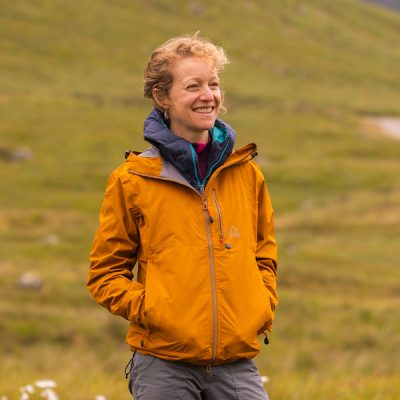
Lydia Cole is a conservation ecologist, interested in how ecosystems, in particular peatlands, can be managed sustainably under contemporary pressures. Past and current projects, involving time in both academia and industry, include: creating remote monitoring tools for UK peatlands; reconstructing past vegetation change and assessing future prospects for Malaysia’s coastal peatlands; exploring human-wildlife interaction in northeast India, and human-peatland interaction in the Peruvian Amazon; and investigating the challenges of peatland restoration in rural Scotland. She’s an advocate for finding co-designed solutions to local challenges. Lydia is a lecturer in Geography and Sustainable Development at the University of St Andrews and Coordinator of online postgraduate programme: Data Literacy for Social and Environmental Justice. She’s Chair of the British Ecological Society’s Conservation Ecology Special Interest Group and on the Scientific Advisory Board of the International Peatland Society. Outside of work, Lydia is usually on her bike, up a hill, or in the sea.

Emma Bush is an ecosystem scientist tackling key societal challenges through her research in plant functional ecology and socio-ecological systems. Her interdisciplinary and international experience spans temperate and tropical regions, ranging across forest, dryland, coastal and urban ecosystems. At the Royal Botanic Garden Edinburgh (RBGE), she co-leads an action-research programme focused on developing nature- and community-based solutions for urban environments.
Emma is passionate about knowledge exchange and is dedicated to making science accessible to policymakers and the public, with a focus on under-served communities. Her work has received international media attention, and she is a member of the Young Academy of Scotland. Through her work and life, Emma seeks to recognise the deep connectedness between humans and nature and foster greater appreciation of the complex and beautiful planet we call home.
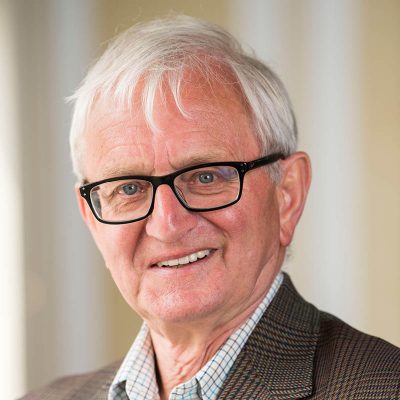
Roger Crofts began his career as an academic geographical scientist specialising in mapping and assessment of natural resources in Scotland.
Roger spent most of his working career as a government adviser and administrator in the Scottish Government and as founder CEO of Scottish Natural Heritage. In retirement, Roger works internationally, in Iceland and in Scotland. His areas of special interest and expertise are governance, strategic planning and implementation in charities; protecting nature, including geoconservation; and advocating more environmentally effective use and management of land and natural resources. He has written and spoken widely about these areas.
Roger was secretary to the RSE Inquiry into Energy Issues for Scotland and the RSE Committee of Inquiry into the Future of Scotland’s Hills and Islands. More recently, he chaired the RSE’s Brexit and the Environment Working Group 2018-20 which produced a well-received advisory paper. He has contributed to RSE consultation responses and gave the Peter Wilson Lecture in 2018.
Roger’s work has been recognised by numerous awards internationally, in the UK and in Scotland from national governments, universities, and professional institutions.

Julia Leino is the Policy & Communications Officer at the Environmental Rights Centre for Scotland (ERCS). ERCS is an environmental law charity that assists the public and civil society to understand and exercise their rights in environmental law and to protect the environment. ERCS operates a free legal advice service and carries out advocacy to improve environmental rights and access to justice.
Most recently, Julia has worked on NPC’s Everyone’s Environment project to co-create recommendations for making environmental policy inclusive to the needs of marginalised groups. She is currently collaborating with community campaigners to tackle the sewage pollution in our waterways, and exploring whether giving nature legal rights could improve environmental protection in Scotland.
Beyond ERCS, Julia has worked on the sustainability of food production, and is interested in how we can better steward our natural environment to address biodiversity loss and health inequalities.
Gillian Dick is Manager of the Spatial Planning – Research & Development team at Glasgow City Council. She holds BSc (Hons) degrees in Town Planning (Heriot-Watt University) and Human Geography (Open University), and is a Chartered Member of the Royal Town Planning Institute (RTPI). She serves on the RTPI’s Partnership and Accreditation Panel and chairs the Queen’s University Belfast Planning School Partnership Board. Gillian led Glasgow’s involvement in the Horizon 2020 Connecting Nature project, showcasing the city’s Open Space Strategy and Local Context mapping. With over 14 years of experience in Glasgow and a background in rural planning in Banff & Buchan/Aberdeenshire, she brings a broad perspective to urban and rural development. Her team focuses on creating adaptable, healthy, and connected places that support climate resilience, biodiversity, and community well-being, while promoting innovative land use and integrated environmental infrastructure.


Curious is the Royal Society of Edinburgh’s (RSE) free festival that celebrates the research, ideas and knowledge shaping society today.
Each year, Curious brings a packed programme of free in-person and online events covering themes from the arts, humanities, policy, science and more. To date, we’ve welcomed over 10,000 attendees for talks, workshops, exhibitions and discussions where you can learn from and speak with Scotland’s leading thinkers. As part of the RSE’s mission to make knowledge useful and accessible for everyone, Curious is open to anyone who wants to learn more about the world around them. No specialist knowledge is needed, just bring your curiosity.
The support of the Scottish Funding Council is vital to our work to inspire and share knowledge with audiences, local communities, and future generations.

Dr Miza Moreau explores the impact of large-scale volunteering through the story of Yugoslavia’s Youth work actions – a movement that mobilised young people to build infrastructure, shape cities, and foster social solidarity.

Hear more about the impact of 100 years of scandals, failings and cover ups in the UK.

Join us for a discussion on the long-overlooked legacy of Belgian colonisation in Rwanda and the lives of the Métis children who were forcibly taken from their African mothers.